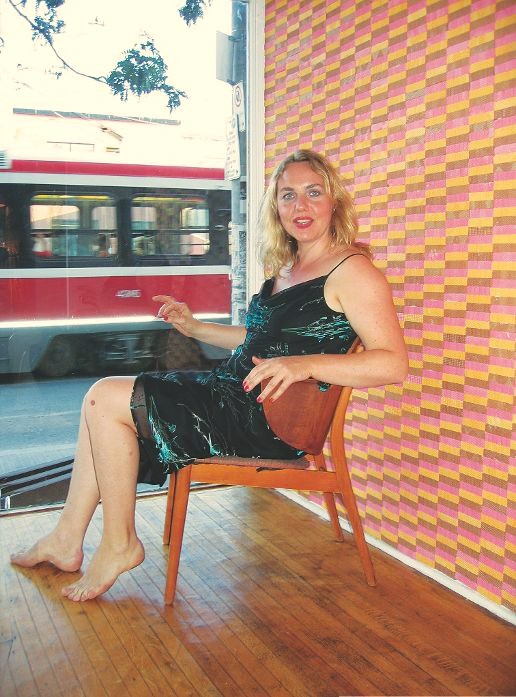
Waferwall
at Inabstracto on Queen Street West, Toronto
No one who has never eaten a food to excess has ever really experienced it, or fully exposed himself to it. Unless you do this, you at best enjoy it, but never come to lust after it, or make the acquaintance of that diversion from the straight and narrow road of the appetite which leads to the primeval forest of greed. For in gluttony thwo things coincide: the boundlessness of desire and the uniformity of the food that sates it. Gourmandizing means above all to devour one thing to the last crumb. (Walter Benjamin, fresh figs)
using consumer forms for new visual vocabulary (depth, line, pattern, colour, haptics) my work is pulled far away from traditional artistic media in its approach. my artwork commonly includes text, image, confectionery and series-produced objects of everyday use, commodities, primarily however edible things, which enable a direct link to be made with the assuaging of a craving, especially when craving turns out to be uncontrolled and by its very nature unassaugeable.
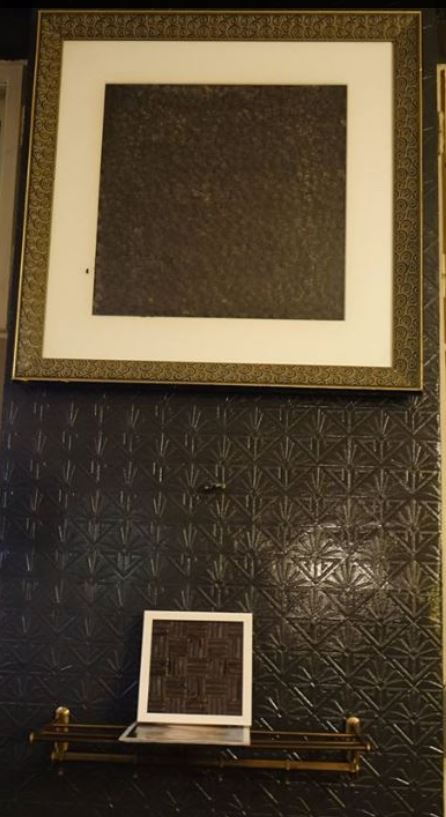
the Black Square
at Rialto bridge
lingering licorice
at Dujardin Berlin
I do not seek to shock, provoke laughter, or dismantle inherited forms. My work begins instead with a return—to the incunabulum of abstraction—not as a historical reference, but as a living condition. The black square, knitted with black licorice, is no longer a gesture of imitation, narration, or perspective. It does not describe the world; it suspends it.
This act creates a void—not emptiness as absence, but as possibility. A space to knit into. Within this void, meaning is not explained or resolved; it is sensed, consumed, and absorbed. The work resists interpretation in favor of experience. It asks not to be understood, but to be tasted, to be felt, to be lingered over—gourmandized rather than decoded. The black square functions here as a threshold rather than an icon. Historically charged, it is nonetheless released from its role as culmination or negation
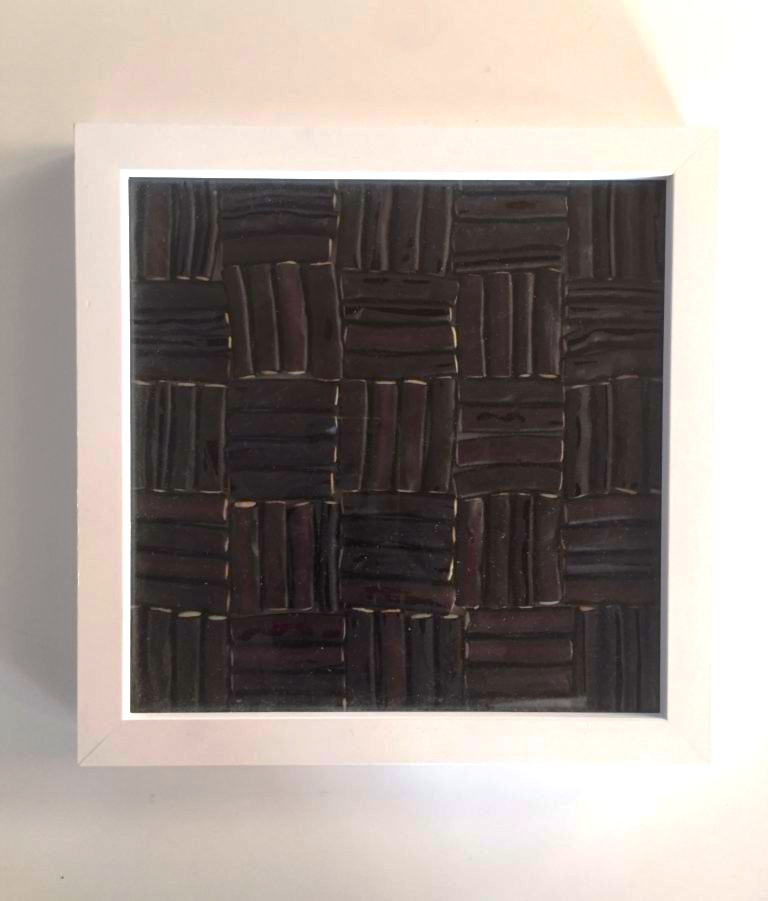
the Black Square - hylé - techné - craquelée
or the perception of abstraction
NUN - die Kunst der Stunde. Berlin
Instead, it becomes a starting point: the condition through which art frees itself from the obligation to represent, illustrate, or signify external realities.
This is not iconoclasm. Nothing is shattered, erased, or denied. The visible world is not attacked; it is surpassed. What remains is not destruction, but transcendence—a movement beyond things as they appear, toward an art that operates through presence rather than depiction.
In relinquishing representation, the work opens a space where form is no longer bound to meaning, and meaning no longer bound to form. What emerges is not an image of the world, but an encounter beyond it.
 Druckversion